
Published on: October 6, 2025
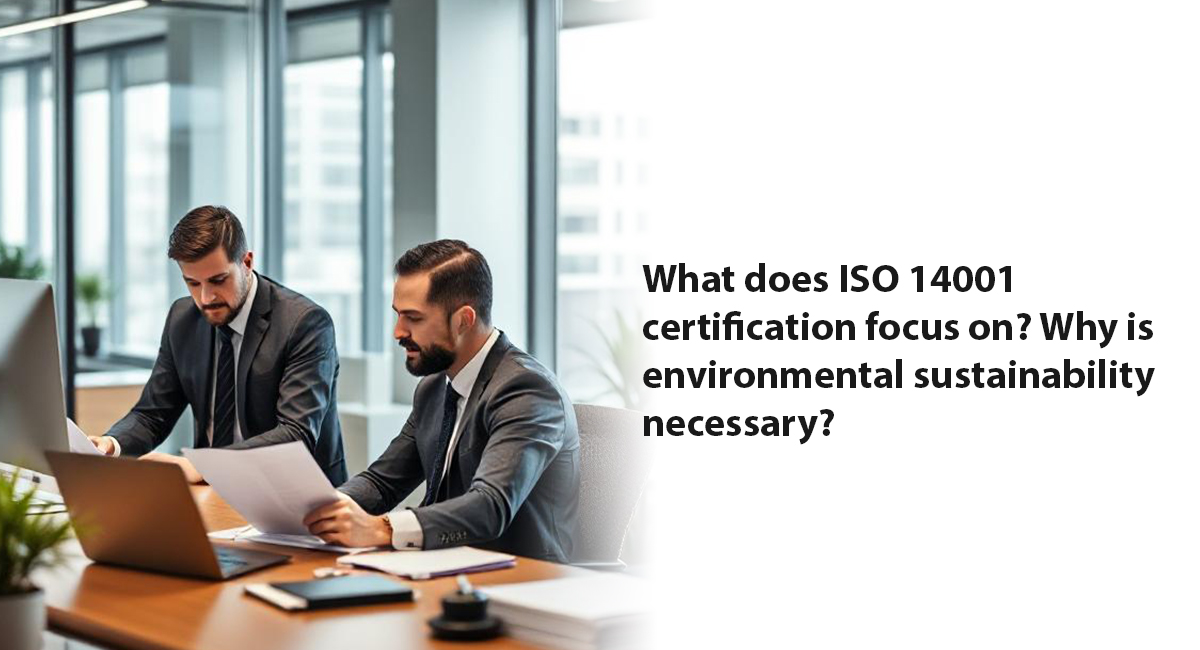
Environmental sustainability is not something companies can ignore these days. Due to the increasing toxic impact of industrial waste and other organisational residues, the welfare of society and the environment is at risk. The changing landscape of global business requires environmentally conscious management systems that will support the commitment towards human welfare. The most advanced and competitive way of maintaining eco-friendly operations is by getting the ISO 14001 certification standard. The standard helps companies adopt a comprehensive framework for regulatory compliance, operational efficiency, and environmental sustainability.
Today, companies, regardless of their size, consider getting ISO certified as a competitive shield. What does ISO 14001 certification focus on? This is, therefore, a common question among small and medium-sized firms that are increasingly eager to incorporate the environmental management framework into their daily operations.
The ISO 14001 certification standard is a globally recognised benchmark providing an effective and comprehensive framework for environmental sustainability management. Designed by the International Organization for Standardization, the standard is a well-organised framework for detecting and mitigating risks associated with resource usage and waste disposal operations. The agenda for implementing the framework is to ensure the process aligns with the regulatory requirements for eco-friendly management of organisational functions. ISO 14001 does not concentrate on quality; instead, it focuses on the overall business performance for sustainability and stakeholder trust.
Key Focus Areas of ISO 14001 Certification – The ISO 14001 certification primarily focuses on the following areas:
1. A policy for environmental commitments – The ISO 14001 certification standard asks companies to establish policies that support the aim and commitment towards sustainability and compliance. The policy must prioritise pollution prevention tactics, considering the possible risks.
2. Legal and Regulatory Compliance – The standard is an effective boon for understanding and applying environmental laws. It enhances the proactiveness among the stakeholders to maintain compliance to avoid governmental interventions and avoid reputational damages. ISO 14001 ensures that the management can remove all possible operational disruptions for continual progress.
3. Environmental Aspects and Impacts – As per the clauses of ISO 14001, companies must evaluate their procedures, services, and organisational waste before making any further implementations. Without assessing waste type, the reason for the high residues, and potential threats, improvement actions might not work.
4. Risk and Opportunity Management – ISO 14001 not only helps with a comprehensive management of operations but also ensures that companies can explore their opportunities alongside detecting possible causes of disruptions. The standard helps to adopt recycling activities and eco-friendly design of services, and the use of different renewable energies.
5. Operational Control and Resource Efficiency – To reduce the emission level and conserve the energy resources, the standard asks companies to implement energy-efficient action plans.
6. Performance Evaluation and Continuous Improvement – Like any other ISO standard, performance evaluation for continuous improvement is imperative to the ISO 14001 certification standard. The management should organise and perform periodic review meetings, internal audits, and readiness assessments to ensure compliance and proactivity.
7. Stakeholder Communication and Awareness – Like other ISO standards, the ISO 14001 values stakeholder involvement, trust, and awareness. Therefore, leadership and communication are two of the focus points of the standard. It asks companies to maintain transparent communication with the regulators, customers, and the communities.
Why ISO 14001 Certification Matters – Achieving ISO 14001 certification brings multiple benefits, such as:
To find the right professional support for implementing an ISO quality management system standard and internal audit requirements, contact us at Compliancehelp. We are the premier site for achieving any ISO certification in Australia. Our customised solutions for ISO and other global certifications are ready to make this seemingly exhausting accreditation process comfortable and completed on time. From basic consultation to audit and analysis, we will cover everything. Get our help answering any questions you have regarding the clauses of any management system standard you require.
ISO 14001 is the environmental sustainability management standard known for offering the most comprehensive set of clauses for managing operational efficiency while reducing the toxic impact of organisational waste.
It includes leadership, policies, support, organisational context, performance evaluation, and continual improvement for maintaining 100% compliance.
If your organisation has already identified the gaps and implemented relevant action plans for improvement, then you must not avoid consulting an ISO professional and getting their help with an internal audit.






Get connected with us on social networks!