
Published on: December 26, 2025
Updated on: December 26, 2025
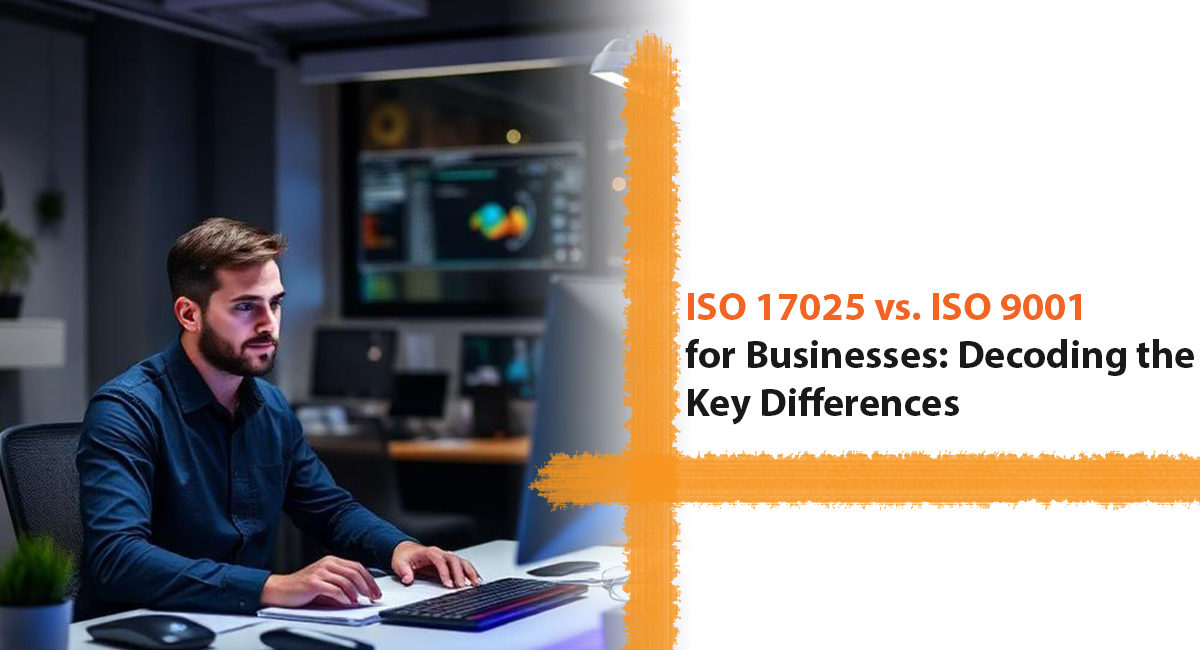
Quality-driven businesses can deliver reliable products and services. This is an operational necessity in this competitive world. Firms across industries must rely on globally recognised standards, where you may query about the differences between ISO 17025 vs. ISO 9001 certification. Note that each offers quality frameworks to strengthen a firm’s culture.
These two standards share a common focus on quality. However, they serve distinct purposes in meeting the organisational needs. It is crucial to understand them and ensure you make a wise decision. Learning how both of them differ from each other plays a key role. So, become aware of the comparison to align everything with your business objectives.
It is the world’s most widely implemented QMS. Firms of all types and sizes can establish the standards effectively. This includes manufacturing, healthcare facilities, and technology firms. It helps develop a process-driven system to achieve consistent quality. This aims at enhancing customer satisfaction and boosting stakeholder trust.
Key areas of focus include:
Most importantly, the standards can be tailored. You can customise requirements to heighten quality and achieve operational excellence.
It is a specialised accreditation standard for testing and calibration laboratories. It incorporates core quality management principles similar to ISO 9001 but outlines rigorous technical requirements. This is critical to generate accurateand reliable test results.
This standard is composed of two main components-
This covers document control to internal audits.
This covers personnel qualifications to technical competence.
Note that ISO 17025 accreditation validates your lab’s quality system. It also ensures your scientific capability to perform lab tests with precision.
Although both standards promote quality and consistency, they differ in their intent and scope. There can also be differences in technical expectations. Check out the following table-
| Aspect | ISO 17025 Certification | ISO 9001 Certification |
| Purpose | – Applicable to testing and calibration laboratories. – Evaluates laboratory-specific methodsand equipment – Concentrates on technical accuracyand scientific competence | – Applicable to any firm across any industry – Does not assess technical laboratory competence – Emphasises broad quality management in production and services |
| Accreditation | Accreditation bodies conduct a technical evaluation before issuing a formal certification. | Accreditation bodies conduct a detailed QMS audit before issuing a formal certification. |
| Technical Competence | – Calibration of instruments. – Validation of test methods. – Competency qualifications for laboratory staff. | Focuses on process consistency in the entire business operations. |
| Industry Relevance | Calibration labs, forensic science labs, environmental testing labs, pharmaceutical, and agriculture testing facilities. | Manufacturing firms, production companies, hospitals, software firms, service providers, and educational centres. |
| Documentation Requirements | – Proficiency testing reports – Calibration records – Equipment maintenance logs – Method validation reports | Emphasises organised documentation that includesconsistent processes and policies. |
Some firms implement both of these standards. This lets them operate with larger corporate environments strategically while maintaining compliance. Although the ISO 17025 integrates many elements of the ISO 9001, you can achieve overall performance excellence.
In general, independent laboratories require the former accreditation only. And, larger firms may pursue both for the appropriate functioning of the entire business.
Firms can gain the following-
Laboratories can gain the following-
Perhaps it depends on your choice,considering business objectives.
Both standards are internationally recognised standards. And, each of them serves different purposes. Knowing the differences associated with ISO 17025 vs. ISO 9001standards helps you follow the guidelines. This is how you can build scientific reliability within laboratories and maintain overall business systems. Also, understanding these differences early is essential for finalising the most appropriate standard that helps you reach your business goals.
Compliancehelp has skilled consultants to provide professional guidance. We can assist you inchoosing the right standard and prepare you for certification. Appoint our experts early and take advantage of expert support in tailoring to your needs, specific to your business.
Not mandatory!The latter incorporates many management principles of the former standard. Thus, businesses can decide whether to implement both of them.
Pharmaceuticals and healthcare diagnostics rely heavily on this certification.
Considering the recognised ISO 17025 vs. ISO 9001,the former is designed for scientific accuracy in labs. It is ideal for testing and calibration laboratories worldwide.
Of course!The best thing is that requirements can be customised. This leads to meeting specific business goals. It can be incorporated in manufacturing, healthcare, or IT firms.
Both of these standards improve trust. For laboratories, ISO 17025 is perfect. For other businesses, they can go with the ISO 9001 to gain credibility.
Yes. You can go ahead to integrate these standards simultaneously. This improves efficiency and enhances overall performance. Ensure you consult with experts and eliminate errors.











Get connected with us on social networks!


