
Published on: September 15, 2025
Updated on: September 15, 2025
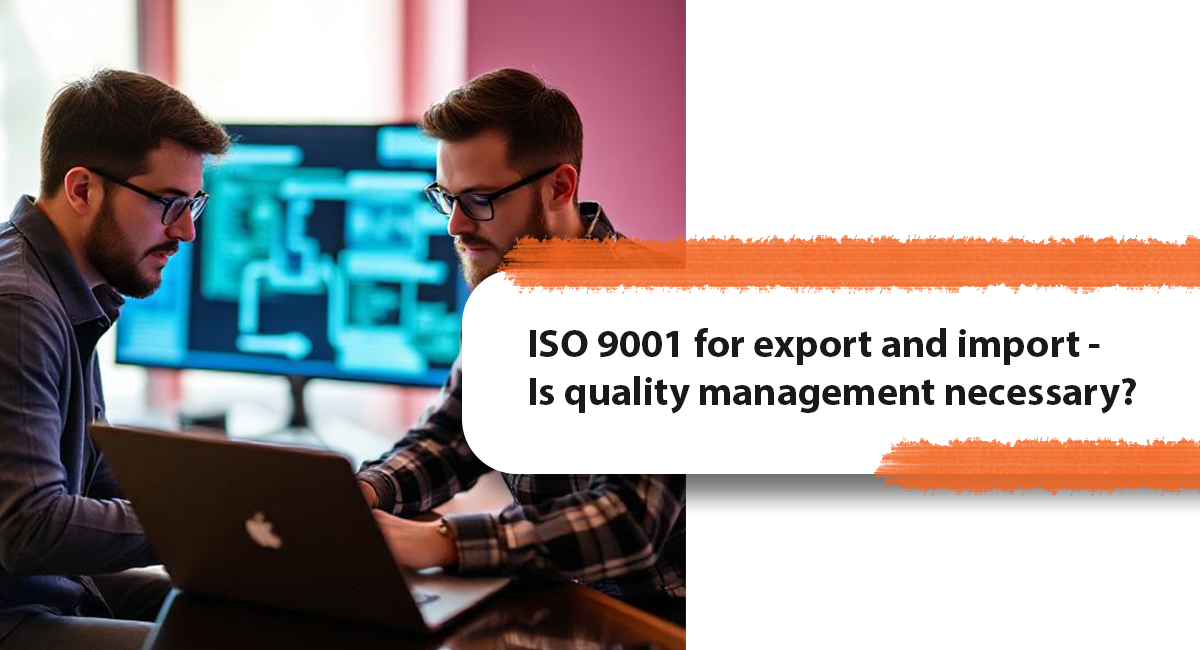
In today’s global marketplace, businesses engaged in export and import face intense competition, strict regulatory requirements, and rising customer expectations. One certification that consistently strengthens credibility and competitiveness in international trade is ISO 9001, the world’s most recognised Quality Management System (QMS) standard. But the big question remains: Is quality management really necessary for export and import businesses? Let’s explore why ISO 9001 is not just beneficial, but essential for international trade. Companies that operate in the export/import business face harsh competition in the market. The following blog talks about the essential need of ISO 9001 for export and import dealings.
ISO 9001 standard is the globally acclaimed benchmark for quality business management. It offers a reliable framework that helps to meet customer requirements and enhance their satisfaction level. In import and export trade, quality is everything. If that is not met, companies lose their target audience. ISO 9001 has an easy-to-implement framework that ensures zero risks and a seamless process for delivering premium services. In today’s world, ISO certifications are a mandatory requirement in many business fields. Especially in the export and import sector, the quality management standard is a major and dominant criterion.
1.Builds Trust with Global Partners – When a company is engaged in international transactions, quality management is the key to establishing trust. ISO 9001 is the ultimate quality guide that helps organisationsunderstand, follow, and maintain the global practices for quality assurance. It assures the buyers about the service, and that leads to a stabilised revenue margin.
2. Ensures Compliance with Regulations – Import and export by international ground is complex, as it has several compliance obligations to meet. Alongside quality management, companies must comply with the documentation needs. With the assistance of ISO 9001, companies can decode the regulatory clauses and implement them effectively.
3. Enhances Product and Service Quality – Consistent quality in both import and export makes a business profitable and sustainable in the market. ISO 9001 has the most practical set of clauses to determine whether the expected quality is met. It helps maintain a proper management system for monitoring, maintaining, and continuously improving services.
4. Improves Supply Chain Management – When a company works with import and export stakeholders, it faces several challenges. Stakeholders’ requirements vary based on their dealings across the globe. ISO 9001 quality management standard offers a structured framework that applies to all. From evaluating suppliers’ activity to managing risks and controlling logistics, the standard has a comprehensive protocol for all.
5. Increases Competitive Advantage – The ISO 9001 standard is accepted globally. Hence, certification is a common demand to get tenders and crack deals. Especially in the importing and export service, ISO 9001-certified companies enjoy extra privileges. They gain access to a better and more promising market where their services are exposed to countless opportunities.
To find the best professional support for attaining the ISO management system standard and the internal audit requirements, contact us at Compliancehelp. We are the premium site for achieving any ISO certification in Australia. Our tailored solutions are designed to make the seemingly daunting accreditation process manageable and efficient. From basic consultation to audit and analysis, we will cover everything. Get help to clarify your understanding of the clauses in any management system standard you require. Ask certified professionals about the ISO 9001 for export and import and get help to accomplish the quality management clauses.
It is the international standard for quality business management. It offers a set of clauses that help to maintain the best industry practices and meet customer expectations.
To get certified, companies must meet the clauses and pass the audit round. The preparation for the audit involves significant assessments like a gap analysis, internal/mock audit, and a readiness review.
Companies get better exposure as they satisfy their existing customers. With the system, companies establish a stabilised revenue margin. Also, organistaions do not face government interventions and pay penalties for lack of compliance. Overall, a quality management standard is the ultimate necessity to stay sustainable in the market.
To get certified, a system must be prepared. A gap analysis is the first step in identifying the internal flaws. To perform the evaluation, companies can think of hiring ISO consultants.












Get connected with us on social networks!


